

The most expensive water damage in Houston homes does not come from burst pipes. It comes from hidden water leaks no one notices, the slow drips that release 30 gallons a day for half a year before anyone realizes what is happening. By the time the homeowner discovers the problem, the plumbing repair is a small fraction of the total bill.
This is what those leaks do to a Houston home over time, month by month.
Months 1 to 2: The Invisible Phase
A pinhole leak in a supply line behind a wall releases water at a rate too low to register as a water bill anomaly. The water saturates the drywall closest to the leak, then begins to wick downward into the wall cavity. The insulation absorbs and traps moisture. The wall studs begin to absorb water at the contact points.
From the homeowner's perspective, nothing is wrong. The house looks normal. The water bill has crept up slightly but the increase is within the normal range of seasonal variation. (Side note: if your water bill is unexplained high, that may be the only early signal a hidden leak gives you. Our piece on slab leak repair cost in Houston covers the bill anomaly diagnostic in more detail.)
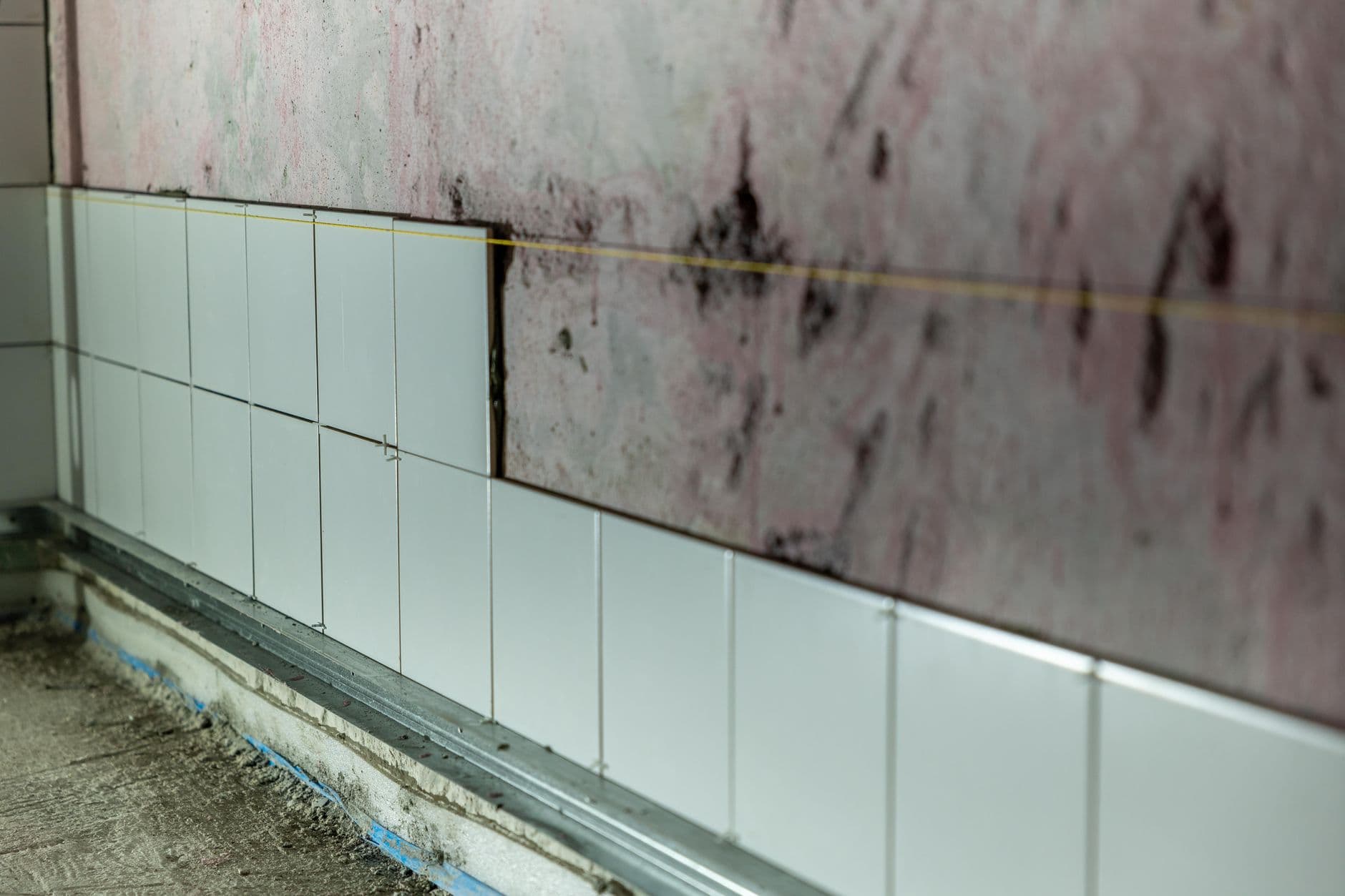
Mold spores have already begun to colonize the back side of the drywall. Black mold (Stachybotrys chartarum) prefers exactly this environment: dark, damp, with cellulose to consume. It cannot be detected from the room side.
Months 2 to 3: First Symptoms Appear
A musty smell becomes noticeable, often most apparent in the morning before the air conditioning has cycled. A small section of baseboard begins to darken or warp. A faint discoloration may appear on the wall, low to the floor.
Most homeowners attribute these signs to other causes: humidity, an old odor in the room, a paint defect. Without an active flood, the connection to a leak is not obvious. (Our 5 slab leak warning signs guide walks through which symptoms most often indicate a hidden leak rather than something else.)
Behind the wall, the situation has progressed significantly. Mold colonies have established. Wall studs at the leak contact point have begun softening. The insulation in the affected wall cavity is permanently compromised and will need to be removed.
Months 3 to 4: Structural Damage Begins
The bottom plate of the wall framing (the horizontal lumber that sits on the slab) begins to rot at the contact points with the wet drywall. The sill plate connection to the slab loosens. If the leak is in an exterior wall, water may begin migrating to the structural sheathing.
In slab construction, the saturated soil under the slab begins to differentially settle. Hairline cracks may appear in the slab, often visible as cracks in tile floors or as door frames that suddenly do not close cleanly. This compounds with Houston's expansive clay problem, which we cover in detail in why our clay soil makes slab leaks almost inevitable.
A larger area of the wall may now show discoloration. Paint may begin to bubble at the affected zone. Crown molding or trim may pull slightly away from the wall as the framing behind it shifts.
Months 4 to 5: Compound Consequences
Termites and carpenter ants are attracted to softened wood. Houston's year round termite pressure means any wet wood in a residential structure is colonized within 30 to 60 days of becoming hospitable. The pest damage compounds the water damage.
Elevated humidity in the affected room damages HVAC efficiency. The system runs longer and harder to maintain temperature, increasing electric bills and shortening the equipment lifespan. Mold spores enter the HVAC ductwork and spread throughout the home, even in rooms far from the leak.
Family members may begin to experience respiratory symptoms, sinus issues, or chronic fatigue. These are typically attributed to allergies or seasonal illness. The connection to mold exposure is often not identified until much later.
Months 5 to 6: Discovery
Something forces the discovery. A floor section that gives slightly underfoot. A water bill that finally crosses a threshold and triggers attention. A ceiling stain in a downstairs room from an upstairs leak. A plumber called for an unrelated issue who notices the moisture.
At this point, the repair work is no longer plumbing. It is reconstruction. The drywall has to come off in significant sections. The framing has to be assessed and partially replaced. The insulation has to be removed and replaced. The flooring has to come up if affected. Mold remediation has to be done under contained conditions.
Total cost for a typical 6 month undetected leak in a Houston home: $35,000 to $80,000, depending on how far the water migrated and which rooms were affected.
The Insurance Picture
Insurance carriers have a specific phrase for this situation: long term seepage and leakage exclusion. Most homeowner policies exclude damage from leaks that occurred over an extended period (typically 14 days or longer). The reasoning is that the homeowner should have detected and addressed the problem earlier.
In practice, carriers often deny or substantially reduce these claims even when the homeowner was genuinely unaware. The burden is on the policyholder to prove the damage occurred suddenly rather than gradually. Without instrumented evidence, like a smart shutoff system's flow logs, that proof is essentially impossible.
Property Value Impact in the Houston Market
A Houston home with a documented water damage history sells for 8% to 15% less than comparable homes, based on Texas real estate data. The mandatory disclosure on the Texas seller's disclosure form alerts every prospective buyer to the history. Buyers either offer less or walk away.
A home with a documented smart shutoff system, on the other hand, can support a slight premium. Partly because of the installed equipment, but mostly because of the insurance discount and the reduced future risk.
Where Water Leak Detection Actually Fits
We want to be honest about what continuous monitoring actually does for this kind of scenario.
A smart water shutoff system installed on the main supply line monitors flow rate continuously and runs a daily pressure diagnostic. For most slow leaks, including the pinhole leaks that cause the worst hidden damage, detection happens during the daily diagnostic. The device closes the main valve and alerts the homeowner.
In the 6 month timeline above, a properly installed smart shutoff would have caught the leak somewhere between hour 12 and day 1 in the vast majority of cases. The invisible phase of months 1 and 2 simply does not happen. The leak gets shut off and the homeowner gets a plumber on site to repair it. (Here is the 60 minute response plan for what to do once a leak is detected.)
The device cannot catch every leak. Very small intermittent leaks may slip below sensitivity thresholds. Leaks that close themselves between diagnostic tests (rare but possible) can be missed. Underground water leak detection in Houston, for leaks outside the home's main supply (yard line, irrigation, pool plumbing), often requires acoustic and thermal imaging equipment that a smart shutoff alone cannot replace.
For Houston homeowners specifically, the math is straightforward. Roughly 1 in 12 Houston homes will experience a slab leak in any given 10 year period. The cost differential between a leak caught in 24 hours and one caught in 6 months is in the tens of thousands of dollars. A smart shutoff does not change the probability of having a leak. It changes the cost of having one.
The Point
Hidden water leaks in Houston homes are the most expensive plumbing problem in our market not because the plumbing repair is expensive, but because time multiplies every consequence. The same leak that costs $300 to fix on day 1 costs $50,000 to remediate on day 180.
A smart water shutoff system is not a device that prevents leaks. It is a device that prevents leaks from running for months.
Call (281) 694-5754 for a free 15 minute consultation. Our Texas Master Plumber will look at your home's specific risk factors and tell you whether installation makes sense. No upsell. We will also tell you what the device cannot do, so you can pair it with the right manual inspections.