

A single burst pipe in a Texas home typically costs between $7,000 and $70,000 depending on how long the water runs before someone finds it. The repair itself — replacing a section of pipe — costs $200 to $500. Everything after that is water damage: saturated drywall ($3,000 to $8,000 to replace), flooring ($2,000 to $15,000), contents ($5,000 to $20,000+), and if mold colonizes within 48 to 72 hours, professional mold remediation ($5,000 to $30,000).
Then come the insurance consequences: a deductible of $1,000 to $5,000 out of pocket, a likely 20% to 40% premium increase at renewal, and possible non-renewal that forces you into the Texas FAIR Plan at even higher rates. The total economic impact of one unmitigated burst often exceeds the value of the pipe repair by a factor of 100 or more. A carrier-recognized smart shutoff installed for $999 catches the burst within seconds and limits the damage to a minor repair.
Anatomy of the Damage: How Fast Water Spreads
A standard half-inch supply line at Houston municipal pressure (40 to 80 PSI) delivers approximately 4 to 8 gallons per minute through a clean break. That is 240 to 480 gallons per hour. The water follows gravity and capillary action simultaneously — it saturates drywall, wicks into subflooring, pools on hard surfaces, and seeps through expansion joints. The damage is not linear. It is exponential. Every hour the water runs, the cost curve steepens.
Within one hour, drywall paper facing is compromised. The paper layer that gives drywall its structural integrity begins to soften and separate from the gypsum core. Once that paper facing is saturated, the entire sheet needs replacement. There is no drying it out and repainting. The section is condemned.
Within four hours, carpet pad and subfloor are saturated. Carpet pad acts like a sponge — it absorbs water and holds it against the subfloor, accelerating damage to the plywood or OSB underneath. Hardwood flooring begins cupping and warping. Laminate flooring swells at the joints and delaminates. These are not cosmetic problems. They are structural replacements.
Within 24 hours, secondary damage begins. Electrical shorts become a risk as water reaches outlet boxes and junction points. Furniture legs wick moisture into upholstery. Electronics on the floor are destroyed. Personal property damage begins compounding with structural damage.
Within 48 to 72 hours, mold begins colonizing. In Houston's subtropical climate, conditions for mold growth are nearly always present: warm temperatures, high ambient humidity, and organic material (drywall paper, carpet backing, wood framing). Once mold establishes in wall cavities, the remediation scope expands dramatically. You are no longer replacing drywall. You are opening walls, treating framing, and sometimes replacing insulation and structural members.
Reference Winter Storm Uri in February 2021 — homes where the water ran for days because pipes burst while residents were evacuated or without power had six-figure remediation bills. The pipes themselves were a $300 fix. The water that ran unchecked for 48 to 96 hours turned those homes into total loss claims.
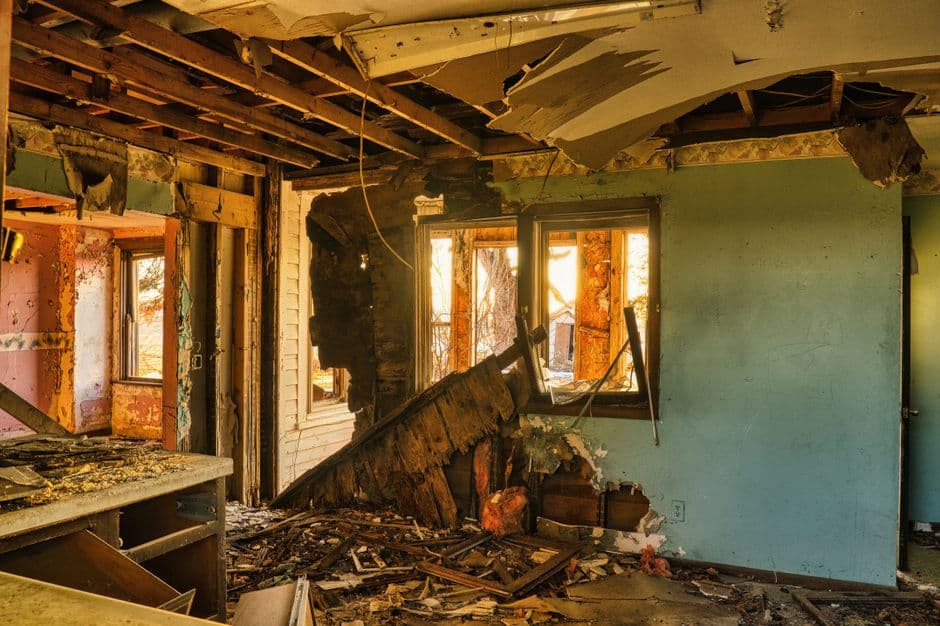
Repair Cost Breakdown
The pipe repair itself is the cheapest part. Everything that follows is water damage, and the total scales directly with how long the water ran before it was stopped. Here is the breakdown by category, based on Houston-area restoration company averages and insurance adjuster data.
$200 – $500
Pipe repair
The actual plumbing fix. A licensed plumber cuts out the failed section and replaces it. This is the only cost if the water is stopped immediately.
$1,000 – $3,000
Emergency water extraction
A restoration company deploys truck-mounted extractors, industrial dehumidifiers, and air movers. The cost depends on the volume of standing water and how many rooms are affected. Most companies bill per square foot plus equipment rental per day.
$3,000 – $8,000
Drywall removal and replacement
Depends on how many rooms are affected. Saturated drywall must be cut out at least 12 inches above the visible water line because moisture wicks upward through the paper facing. Includes hanging, taping, texturing, and repainting.
$2,000 – $15,000
Flooring replacement
Hardwood is the most expensive to replace and the least forgiving of water exposure. Laminate swells irreversibly at the joints. Carpet is cheapest to replace but most prone to mold if the pad is saturated. Tile typically survives but the subfloor underneath may not.
$5,000 – $20,000+
Contents (furniture, electronics, personal property)
Upholstered furniture that sits in water for more than a few hours is typically a total loss. Electronics on the floor are destroyed on contact. The contents line on an insurance claim is often the most contested because replacement cost versus actual cash value can differ by 50% or more.
$5,000 – $30,000
Mold remediation (if water ran 48+ hours)
Professional mold remediation requires containment, HEPA filtration, removal of contaminated materials, antimicrobial treatment, and clearance testing. In Houston, where ambient humidity accelerates mold growth, remediation costs run higher than national averages.
$2,000 – $8,000
Temporary housing
Hotel or short-term rental during remediation. A moderate water damage remediation takes 5 to 10 days. A severe case with mold remediation can take 3 to 6 weeks. Your homeowner's policy may cover additional living expenses, but it is subject to sub-limits and the same deductible.
Moderate scenario (caught within 24 hours)
$15,000 – $35,000
Severe scenario (multi-day undetected)
$50,000 – $100,000+
Caught in 8 seconds (smart shutoff)
$280
Average repair: plumber visit + small drywall patch
Caught in 8 hours (no shutoff)
$35,000
Average remediation: extraction, drywall, flooring, contents
The Insurance Side: Deductible, Premium Hit, and Non-Renewal Risk
Filing a water damage claim has three costs beyond the repair itself, and most homeowners do not account for any of them until after the claim is filed.
The deductible
The deductible in Texas typically runs $1,000 to $5,000 and sometimes higher in coastal areas where carriers set percentage-based deductibles tied to dwelling coverage. On a $400,000 home with a 1% deductible, you pay the first $4,000 of every claim out of pocket. The insurance check covers everything above that threshold, but the deductible is a guaranteed loss to the homeowner on every incident.
The premium increase
A single water damage claim increases your premium by 20% to 40% at next renewal, and that increase persists for 3 to 5 years. On a $6,600 Houston-area premium (the current metro average), that is $1,320 to $2,640 per year in additional cost. Over the 3 to 5 year surcharge window, one claim adds $4,000 to $13,200 in premium impact alone.
Non-renewal risk
After one or two water claims within a 3-year window, carriers may decline to renew your policy. In the current Texas market, where carriers are already tightening underwriting standards across the Gulf Coast, a single large water claim can trigger non-renewal at the next policy anniversary. When a standard carrier non-renews your policy, your options narrow quickly. You can shop the surplus lines market (higher premiums, less coverage) or end up on the Texas FAIR Plan — the insurer of last resort — where premiums run 2x to 3x standard market rates.
Add it up: the claim that cost $35,000 to repair ends up costing $50,000 or more over 5 years when you include the deductible, the premium surcharge, and the potential non-renewal consequence. The pipe repair was $300. Everything else was the cost of response time.
How your policy form affects settlement amounts differs significantly between HO-A, HO-B, and HO-3. See the HO-A vs HO-B vs HO-3 guide for how each form handles water damage claims. For freeze-specific pipe failure claims, see freeze damage claims in Texas.

Prevention vs. the Deductible
The math on prevention versus reaction is not close. A smart shutoff install starts at $999. The carrier-recognized certificate earns a 10% to 15% credit on the water damage portion of your premium — typically $300 to $600 per year on a Houston-area policy. The install pays for itself in 18 to 24 months through the credit alone, before you count the avoided claim.
Prevention path
$999
One-time install cost
+$300 – $600/yr
Annual insurance credit (net positive after 18-24 months)
Reaction path
$35,000
Average unmitigated claim
+$1,000 – $5,000
Out-of-pocket deductible
+$5,000 – $15,000
Premium increases over 5 years
The prevention path costs $999 upfront and returns $300 to $600 per year in perpetuity. The reaction path costs $41,000 to $55,000 in total economic impact from a single incident. The shutoff does not prevent the pipe from cracking. Pipes crack. What the shutoff does is close the main valve in roughly 8 seconds, limiting the discharge to approximately half a gallon instead of hundreds of gallons.
For the full investment analysis comparing the shutoff to other home upgrades, see the best home investment on a tight Texas budget. For the broader premium context driving these numbers, see why Houston insurance keeps rising. And if you want carrier-specific data for the Houston metro area, the service area page has zip-level premium ranges.
Get ready before the freeze, not after the burst.
A smart water shutoff installed today protects an empty house at 3 a.m. in January. Waiting for the first hard-freeze warning means competing for the same install slots as everyone else who waited. Book a free assessment now and head into winter protected.
Get my free freeze-season assessmentWhat Happens in the First 60 Minutes After a Burst
The difference between a $280 repair and a $35,000 remediation is what happens in the first hour. Here is the timeline of escalation when no automatic shutoff is present.
Without a smart shutoff
Minute 0: The pipe fails. A joint gives way, a fitting cracks, or a supply line ruptures. Water begins flowing at 4 to 8 gallons per minute at municipal pressure.
Minute 1: Water is pooling on the floor around the failure point. If the break is behind a wall or in a ceiling cavity, it may not be visible yet.
Minute 5: 20 to 40 gallons on the floor. Water is spreading to adjacent surfaces. If the break is on a second floor, water is now dripping through the ceiling below.
Minute 15: 60 to 120 gallons discharged. Water is reaching adjacent rooms through doorways and hallways. Drywall at floor level is absorbing water. Carpet pad is beginning to saturate.
Minute 30: 120 to 240 gallons discharged. Drywall saturation is well underway. The water line on walls is rising. Baseboards are compromised. Any electronics, boxes, or furniture legs on the floor are in standing water.
Minute 60: 240 to 480 gallons discharged. Subfloor is compromised. Electrical risk is real — water may have reached outlet boxes. The damage is no longer a repair. It is a remediation. From this point forward, every additional hour adds thousands of dollars to the final cost.
With a smart shutoff
Minute 0: The pipe fails. Water begins flowing.
Second 3: The device detects anomalous flow — the sudden spike in volume and pressure change that indicates a line break rather than normal fixture use.
Second 8: The main valve closes automatically. The homeowner receives a push notification on their phone.
Total discharge: Approximately 0.5 gallons. The water on the floor can be cleaned up with a towel.
Repair cost: A plumber visit to replace the failed section ($200 to $500) and possibly a small drywall patch if water reached the wall. No extraction company. No dehumidifiers. No insurance claim. No deductible. No premium increase. No disruption to daily life.
The pipe still cracked. The difference is 0.5 gallons versus 480 gallons. That is the difference between a towel and a restoration crew. Between a $280 invoice and a $35,000 remediation. Between a Tuesday inconvenience and a 6-week displacement.
Frequently Asked Questions
Does homeowner insurance cover burst pipe damage?
Yes, sudden and accidental discharge is covered on HO-B and HO-3 policies. HO-A covers it only if water damage is a named peril on your specific policy. But covered does not mean free: you pay the deductible out of pocket, and the claim impacts your premium and claims history for 3 to 5 years. A single water damage claim typically increases your premium by 20% to 40% at renewal, and that surcharge persists. The total cost of a "covered" claim often exceeds the repair cost by $5,000 to $15,000 in premium impact alone.
How long does mold take to start after water damage?
Mold spores begin colonizing in 24 to 48 hours under the right conditions: warm temperatures, humidity, and organic material (drywall paper, carpet backing, wood). In Houston's climate, conditions are nearly always right. Ambient humidity in the Houston metro averages 75% to 90% for most of the year, which means any residual moisture from a leak creates ideal mold conditions almost immediately. Professional remediation is required once mold is established — it cannot be reliably removed with consumer products.
Can I handle water damage cleanup myself?
Small spills on hard surfaces, yes. Anything involving saturated drywall, subfloor penetration, or water that has been standing for more than 24 hours should involve a professional restoration company with moisture detection equipment. The risk of DIY cleanup is not the visible water — it is the hidden moisture. Water wicks behind walls, under cabinets, and into subfloor cavities that are not visible from the surface. DIY cleanup that misses hidden moisture leads to mold colonization weeks later, and mold remediation costs far more than the original water damage restoration would have.
Is the $999 install really enough to prevent this?
The install puts a device on your main water line that monitors flow 24/7 and closes the valve automatically when it detects a burst. It does not prevent the pipe from cracking — pipes crack due to age, corrosion, freeze events, and material failure. What it does is limit the discharge to seconds instead of hours. The difference between a $280 repair and a $35,000 remediation is response time. Eight seconds of automatic response versus eight hours of undetected flow. The device also sends a push notification to your phone so you can call a plumber immediately, and it provides the carrier-recognized certificate that qualifies your policy for the water mitigation credit.
Get ready before the freeze, not after the burst.
A smart water shutoff installed today protects an empty house at 3 a.m. in January. Waiting for the first hard-freeze warning means competing for the same install slots as everyone else who waited. Book a free assessment now and head into winter protected.
Get my free freeze-season assessmentRelated reading
Blog
The Texas freeze survival checklist
Step-by-step preparation for the next hard freeze event.
Blog
Why Houston insurance keeps rising
Premium drivers and the one credit most homeowners are missing.
Guide
Freeze damage claims in Texas
How frozen pipe claims work and why carriers reward prevention.
Guide
HO-A vs HO-B vs HO-3
How your policy form affects water damage coverage and settlement.
Service area
Houston
Carrier data, zip-level premiums, and install availability.