

If you are leaving a Houston-area home empty during winter, the single most important protection is an automatic water shutoff that can detect a burst pipe and close the main line without human intervention. An empty house during a freeze has no one to drip faucets, no one to notice a pressure drop, and no one to find the water until days or weeks later. The difference between a $280 repair and a $35,000 remediation is whether the water ran for 8 seconds or 8 hours.
A carrier-recognized smart shutoff device installed under a Texas Master Plumber license monitors flow and pressure continuously, sends phone alerts when it detects an anomaly, and closes the main valve within seconds. It also earns a 10-15% insurance credit ($300-$600/year on a typical Texas policy) through the carrier-recognized certificate. For any homeowner who travels during the winter months, this is the single highest-impact measure you can take before locking the front door.
The snowbird and holiday-travel risk in Texas
Houston is a travel city. Between Thanksgiving, Christmas, New Year's, and spring break, the average Houston household leaves the home empty for 10-20 days during the prime freeze window from December through February. Texas sees 5-15 nights below 32F in a typical winter, and the greater Houston area is not exempt. The odds of a freeze hitting while you are gone are not trivial. They are statistically likely if you travel during any two-week stretch in that window.
Snowbirds who head to Florida or Arizona for weeks at a time face even higher exposure. A six-week absence from mid-December through late January covers the coldest stretch of the Texas winter. But it is not just retirees. Business travelers who fly out Sunday night and return Thursday face four consecutive nights of unmonitored plumbing every week. Families at grandma's house for Christmas week leave the home dark for seven to ten days. Holiday visitors who drive to Dallas, San Antonio, or Austin for a long weekend leave the house empty during unpredictable cold snaps.
Any absence during the freeze window is a window of vulnerability. The longer the absence, the wider that window opens. And unlike a summer trip where the worst plumbing outcome is a slow leak under the kitchen sink, a winter absence carries the specific risk of catastrophic pipe failure from frozen water expanding inside copper and PEX supply lines.
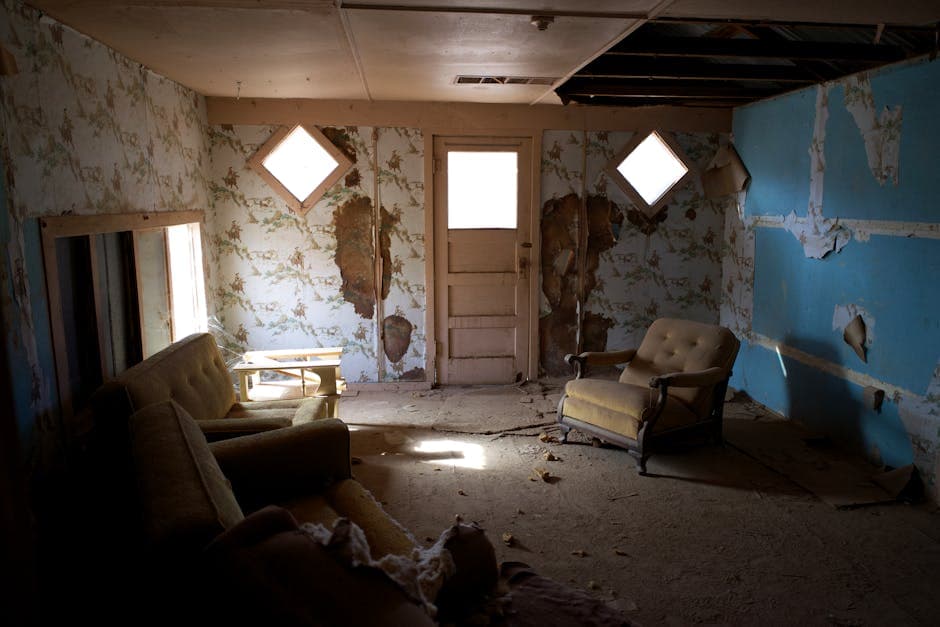
Why an empty house is far more dangerous in a freeze
A freeze does not discriminate between occupied and unoccupied homes. The pipes do not care whether someone is sleeping upstairs. But the consequences diverge dramatically based on whether a human is present to respond. Five specific factors make an empty house exponentially more dangerous during a freeze event.
No one to drip faucets. The most basic freeze prevention measure in Texas is opening faucets to a slow drip to keep water moving through the lines. This works. But it requires a human present to turn on the faucets before the freeze arrives and to monitor them through the night. If you are in Colorado for Christmas, no one is dripping your faucets.
No one to notice a pressure drop. A faucet slowing to a trickle is the earliest warning sign that ice is forming in a supply line. But that warning is only useful if someone is using the faucets. In an empty house, the pressure can drop to zero and no one will know until someone opens a tap days later.
No one to catch the burst early. A pipe fails at 3 a.m. on day three of a ten-day trip. The water begins flowing immediately. In an occupied home, someone hears the sound, sees the water, or notices the wet ceiling within hours. In an empty house, the water runs continuously until someone physically enters the home. That could be three days. It could be eleven.
No thermostat oversight. If the heater fails or the power goes out, there is no one to notice. The interior temperature drops from 68F to ambient outdoor temperature within hours in a poorly insulated home. During Winter Storm Uri, 4.5 million Texas homes lost power. Homes with absent owners had no one to arrange emergency heating, no one to open cabinets under exterior-wall sinks, and no one to begin emergency draining of the system.
The damage compounds exponentially. A burst half-inch copper supply line flows at approximately 8 gallons per minute. That is 480 gallons per hour. 11,520 gallons per day. Three days undetected: 34,560 gallons inside your home. The remediation cost is not proportional to the water volume. It is exponential. After 24 hours, you are dealing with saturated drywall and subfloor. After 48 hours, structural damage begins. After 72 hours, mold colonization starts. After seven days, the remediation scope expands from one room to the entire floor or the entire home. The secondary losses, including contents, alternative living expenses, and lost time, multiply alongside the structural damage.
8 gal/min
Flow rate from a burst half-inch supply line
34,560 gal
Total water from 3 days undetected
72 hrs
Time until mold colonization begins

A two-week trip and a day-three burst
The following is an illustrative scenario, not a testimonial or specific case study. It is constructed from common claim patterns reported by Texas adjusters and remediation contractors.
A family of four leaves Houston on December 20 for a 14-day Christmas trip to Colorado. The thermostat is set to 62F. Cabinet doors are closed. The main water valve is open. No smart shutoff is installed.
On December 22, day three, a hard freeze hits Houston. The overnight low drops to 19F. A hairline crack in an attic supply line, weakened months earlier by a prior freeze-thaw cycle that went unnoticed, opens under the pressure change as ice forms and expands inside the pipe. Water begins flowing into the attic insulation at approximately 2 gallons per minute.
By morning on December 23, water has saturated the blown-in insulation and begun dripping through the ceiling into the master bedroom. The ceiling drywall absorbs water for hours before the drip becomes a steady stream. By the end of day one of the leak, the master bedroom ceiling is visibly sagging. Water has spread along the ceiling joists into the hallway and the adjacent bathroom.
By December 25, day three of the leak, the master bedroom ceiling partially collapses. Water is now flowing freely into the room, soaking carpet, furniture, clothing in the closet, and electronics. The water finds the interior wall cavity and begins migrating downward into the living room on the first floor.
By December 29, day seven of the leak, mold is actively colonizing behind the wet drywall in the master bedroom, the hallway, and the living room ceiling. The subfloor under the master bedroom carpet has begun to delaminate. The water has reached the garage through the shared wall. The family has no idea. They are skiing.
The family returns on January 3. They open the front door to a home with standing water on the first floor, a collapsed ceiling in the master bedroom, visible mold on multiple walls, and the smell of sustained water damage throughout. The remediation estimate comes in at six figures. Contents losses add five figures. The family moves into a hotel while the work is completed over the next three months. The insurance claim settles, but the premium increase at renewal and the risk of non-renewal follow them for years.
Now rewind to December 22 and add a smart shutoff to the equation. The device detects anomalous flow within seconds of the pipe opening. It recognizes that no fixtures are in use, the flow pattern does not match any learned usage behavior, and the sustained flow indicates a failure. The main valve closes automatically. Total water released: less than a gallon. The device sends a push notification to the homeowner's phone in Colorado: "Anomalous flow detected. Main valve closed."
The homeowner calls a neighbor to check the house. The neighbor finds a wet patch in the attic insulation and a small damp spot on the master bedroom ceiling. A plumber visits the next day to repair the cracked line. Total damage: a wet patch of insulation and a $280 drywall repair. The family enjoys the rest of their vacation. They come home to a dry house.
Vacation rentals and second homes
Everything described above applies with even greater force to vacation rentals and second homes. For the full guide on vacation rental protection, see our smart water shutoff guide for Texas vacation rentals. The core issue is the same: extended vacancy amplifies every risk factor.
Second homes at Galveston, Lake Conroe, and Lake Livingston face the primary residence freeze risk amplified by even longer vacancy periods. A Lake Conroe second home occupied only on weekends is empty 5 days a week, 52 weeks a year. That is 260 days of unmonitored plumbing annually. A Galveston beach house may sit empty for months during winter when rental demand drops and the owner stays in Houston. The vacancy window at a second home is not measured in days. It is measured in weeks and months.
The detection delay at a second home is categorically worse than at a primary residence. At your primary residence, a burst pipe during a trip might run for 5-14 days before you return. At a second home with no guests booked, a burst pipe could run for weeks before anyone enters the property. The remediation costs scale accordingly. A claim that would be $35,000 at a primary residence becomes $75,000-$150,000 at a second home because of the extended run time.
The smart shutoff is arguably more important on these properties than on a primary residence. The vacancy window is longer. The detection delay is worse. The property is farther from the owner. And the insurance premium is already higher, which means the 10-15% credit saves more in absolute dollars. If you own a second home in the Houston metro or surrounding lake and coastal markets, the device pays for itself faster and prevents larger losses than it does on your primary residence.
A short pre-travel checklist
Before you leave for any winter trip, run through this quick list. For the full comprehensive version, see our Texas freeze survival checklist.
- Set the thermostat to 60F. This is higher than the 55F minimum recommended for occupied homes. The reason: no one is monitoring. If the heater cycles inefficiently, if a window seal leaks cold air, or if outdoor temps drop below forecast, the extra 5 degrees provides a margin of safety that an absent homeowner cannot provide through observation.
- Have a neighbor or house sitter check every 48 hours. A quick walk-through catches problems while they are still small. The neighbor does not need to do anything except confirm that water is not running where it should not be and that the heat is working.
- Know your main shutoff location. If you do not know where it is, find it before you leave and make sure your neighbor knows too. In an emergency, the neighbor needs to close that valve in under 60 seconds.
- Leave cabinet doors open under kitchen and bathroom sinks on exterior walls. This allows heated interior air to reach the pipes behind the wall.
- Disconnect outdoor hoses. A connected hose traps water in the hose bib and the supply line behind it. When that water freezes, the fitting fails and the leak runs into the wall cavity.
- Install a smart shutoff before you leave. This is the only item on the list that works while you sleep, works while you drive to the airport, and works while you are 1,500 miles away. Every other item on this list requires a human to execute or monitor.
Get ready before the freeze, not after the burst.
A smart water shutoff installed today protects an empty house at 3 a.m. in January. Waiting for the first hard-freeze warning means competing for the same install slots as everyone else who waited. Book a free assessment now and head into winter protected.
Get my free freeze-season assessmentHow remote shutoff and phone alerts change the math
With a Moen Flo, you monitor your home's water system from anywhere via the app. Real-time flow data, pressure readings, and temperature monitoring with compatible sensors. The device learns your home's usage patterns over 3-7 days and establishes a baseline. Any deviation from that baseline triggers graduated alerts, from a notification about unusual usage to an automatic valve closure for burst-level events.
Here is what the travel scenario looks like with the device installed. You are in Colorado. It is 2 a.m. in Houston. The temperature drops to 19F. A weakened pipe fitting in the attic cracks. Water begins flowing. The Moen Flo detects flow that does not match any learned pattern. No fixtures are scheduled to run. The flow rate exceeds the slow-leak threshold. The device confirms the anomaly and closes the main valve within seconds. Your phone buzzes: "Anomalous flow detected. Main valve closed."
You open the app from your hotel room. You see the flow spike and the automatic closure confirmation. You call your neighbor and ask them to check the house in the morning. The neighbor confirms a small damp spot in the attic and a dry house otherwise. You call a plumber and schedule a repair for the next day. Total damage: minimal. Total cost: a service call and a patch. Total stress: one notification and two phone calls instead of returning to a destroyed home.
This is not a luxury feature. For any homeowner who travels during winter, it is basic risk management. The device costs less than the deductible on a single water damage claim. It prevents the claim entirely. And it earns an insurance credit every year it is installed. The math is not close.
For homeowners in The Woodlands and north Houston, the freeze exposure is slightly higher than central Houston due to the tree canopy and slightly lower overnight temperatures. The smart shutoff is the same device and the same install, but the risk reduction is proportionally greater because the freeze probability is higher.

Comparing the two outcomes
The contrast between traveling with and without a smart shutoff is not incremental. It is categorical. The same pipe fails in both scenarios. The same freeze hits the same house on the same night. The only variable is whether a device is monitoring the water line.
Without smart shutoff
- Water runs for 3-14 days undetected
- 34,560+ gallons inside the home
- Ceiling collapse, subfloor damage, mold
- $35,000-$150,000 remediation
- 3-6 months of displacement
- Premium increase or non-renewal
With smart shutoff
- Valve closes in seconds
- Less than 1 gallon released
- Small damp spot, no structural damage
- $280 drywall repair
- No displacement
- Insurance credit continues every year
The device does not prevent the pipe from failing. Pipes fail. That is a material reality of residential plumbing in a climate with freeze-thaw cycles. What the device prevents is the catastrophic consequence of an undetected failure. It converts a potential six-figure loss into a minor repair. It converts months of displacement into a phone call. And it does this whether you are asleep upstairs or skiing in another state.
For travelers, the value proposition is not theoretical. It is the difference between coming home to your house and coming home to a remediation project. If you compare the cost of a smart shutoff versus a manual shutoff, the smart version is the only option that works when you are not physically present. And traveling during winter is the exact scenario where physical presence is impossible by definition.
Frequently asked questions
Can I just turn off the water at the main before I leave?
Before closing any valve, identify which valve serves domestic water and follow all life-safety requirements. HydroSense devices are installed only on the domestic water line and never control fire-sprinkler or fire-suppression piping. Closing the domestic main does not drain the household lines, so stagnant water can still freeze if the home loses heat. A smart shutoff on the domestic line keeps household water available for normal use and closes that line if it detects a configured leak event. It does not change or replace the home's fire-protection system.
What if the power goes out while I'm away?
Most smart shutoff devices have battery backup that keeps the valve functional for 24-72 hours without power. The valve defaults to the last position if the battery dies, meaning if it was open before power loss it stays open, and if it closed due to a detected leak it stays closed. More importantly, the device detects flow changes before power failure typically occurs. In a freeze event, the pipe usually fails during the coldest hours of the night, often before the power grid reaches its failure point. The device catches the burst and closes the valve while it still has both grid power and battery reserve.
Do I need WiFi for the device to work?
The device operates autonomously. It monitors flow, detects anomalies, and closes the valve without WiFi. WiFi is needed for remote alerts and app monitoring. If WiFi goes down, whether from a power outage, a router failure, or an ISP issue, the device still detects leaks and closes the valve. You just will not get the phone notification until connectivity restores. When WiFi comes back, the app will show a log of all events that occurred during the outage, including any valve closures and the flow data that triggered them.
How far in advance should I install before a trip?
The physical install takes about 2 hours. However, the device needs 3-7 days to learn your home's water usage patterns before it can accurately detect anomalies. During this learning period, the device is still monitoring and will catch large bursts, but the fine-tuned leak detection improves with each day of baseline data. Schedule the install at least 2 weeks before your trip. This gives the device a full learning period plus a buffer for scheduling. If you have a trip in December, book the install in November. If freeze season catches you off guard, call us anyway. A device with 3 days of learning is still vastly better than no device at all.
Get ready before the freeze, not after the burst.
A smart water shutoff installed today protects an empty house at 3 a.m. in January. Waiting for the first hard-freeze warning means competing for the same install slots as everyone else who waited. Book a free assessment now and head into winter protected.
Get my free freeze-season assessmentRelated reading
Blog
The Texas freeze survival checklist
The full pre-freeze preparation guide for Texas homeowners.
Blog
Smart vs manual shutoff
Why a manual valve is not enough when you are not home to turn it.
Blog
Smart shutoff for vacation rentals
Galveston, Lake Conroe, and Lake Livingston owners guide.
Device
Flo by Moen
Real-time flow monitoring, automatic shutoff, and app-based remote control.
Service area
The Woodlands
North Houston service area with elevated freeze exposure.