

A manual shutoff valve only works if you are home, awake, and fast enough to close it before the damage accumulates. In a freeze, most pipe failures happen between midnight and 6 a.m. when temperatures bottom out and no one is checking faucets. A smart water shutoff monitors flow and pressure continuously, detects the anomalous pattern of a burst pipe, and closes the main valve automatically within approximately 8 seconds, no human intervention required. The practical difference: a manual valve that requires you to find it, reach it, and turn it under stress versus an automatic system that handles the crisis while you sleep. The smart shutoff also earns a 10-15% carrier insurance credit through its carrier-recognized certificate, returning $300-$600/year. The manual valve earns nothing. For a Houston home where the average annual premium is $6,600, this distinction matters.
How a Manual Shutoff Works and Where It Fails
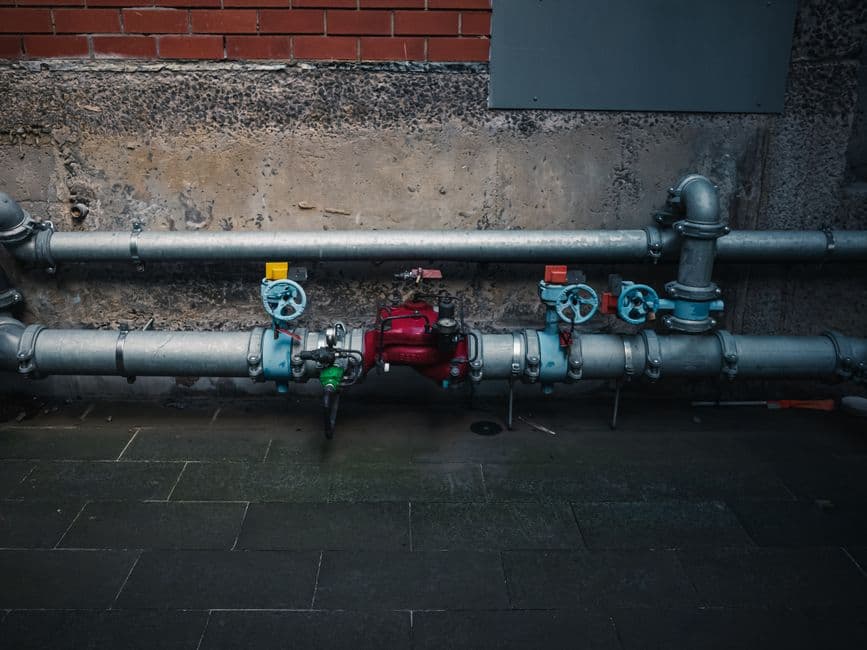
Every Houston home has a manual main shutoff valve. It is typically a gate valve or ball valve located where the city supply enters the home, garage, utility closet, or exterior near the meter. In theory, closing this valve stops all water flow to the home. In practice, the manual valve has five failure points that make it unreliable as your primary defense during a freeze.
Location. Many homeowners do not know where their shutoff valve is. During Winter Storm Uri, plumber hotlines across Harris County were flooded with calls from homeowners who could not find their valve. When water is pouring through the ceiling at 2 a.m., searching the garage with a flashlight is not a reliable response plan. The valve may be behind the water heater, recessed into a wall, or buried under years of stored items that have accumulated around it.
Accessibility. Even when you know where the valve is, reaching it during an emergency is another matter. The valve may be behind storage bins, in a crawl space that requires moving furniture to access, or require a special wrench for the meter-side valve at the street. In the dark, in the cold, with water running, accessibility becomes a real obstacle.
Condition. A gate valve that has not been turned in 10 years may be corroded, seized, or stuck. This is common in Houston homes where the valve sits unused between rare freeze events. Forcing a stuck valve can break the valve body or the pipe connection itself, creating a worse problem than the one you were trying to solve. Ball valves are more reliable than gate valves for long-term inactivity, but even ball valves can develop mineral buildup in Houston's hard water that makes them stiff after years of disuse.
Response time. You have to detect the leak, get to the valve, and close it. At 3 a.m. during a freeze, that sequence takes 10-30 minutes under realistic conditions. You wake up to the sound of water, orient yourself, find a flashlight, locate the valve, clear any obstructions, and turn it. At 8 gallons per minute, a typical burst pipe flow rate, 10 minutes is 80 gallons of water on your floors, walls, and belongings. Thirty minutes is 240 gallons. That volume is the difference between replacing a section of drywall and gutting a room.
Absence. If you are not home, the manual valve is useless. It requires a human hand. A pipe that bursts while you are at work, on vacation, or even out running errands has no defense. The water runs until someone physically arrives and closes the valve. During Uri, some of the largest claims came from homes where the owners were staying elsewhere because they had lost power, and the pipes burst after pressure returned to the city water system while the homes sat empty.
How a Smart Shutoff Works
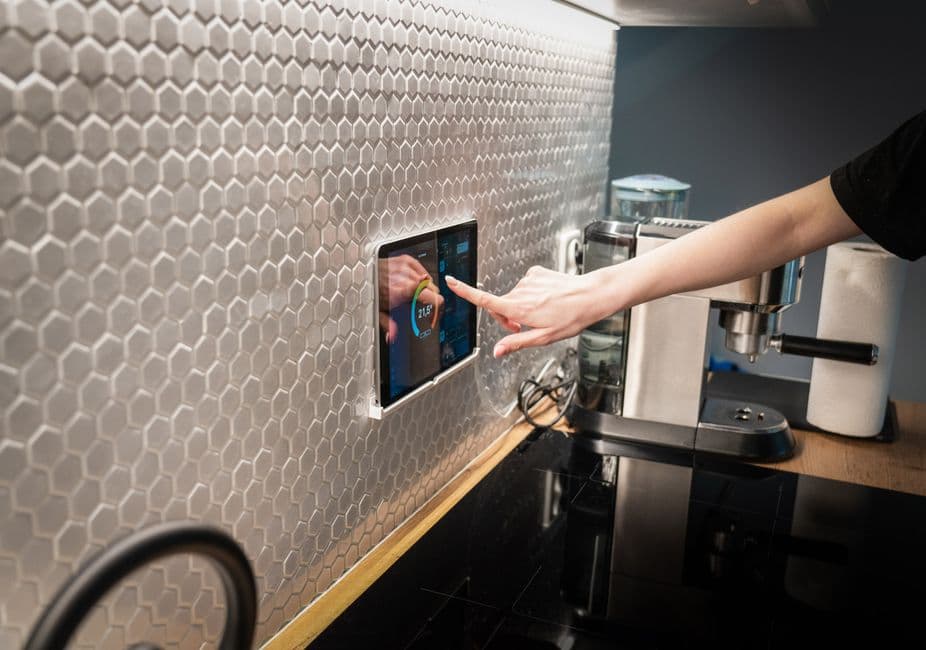
A smart shutoff device installs on the domestic water line and monitors two things continuously: flow rate and pressure. Machine learning establishes a baseline of your home's normal water usage patterns over a 3-7 day calibration period. The device learns when you shower, when the washing machine cycles, and when the house is typically idle. Irrigation is monitored only when it is specifically requested, technically reviewed, and included in the written installation scope. The proposal confirms the plumbing configuration and any separate equipment; one device is not assumed to control both systems. Fire-sprinkler and fire-suppression piping are always excluded.
When the device detects a flow pattern consistent with a burst, sudden high volume that does not match any learned pattern such as a toilet flush, shower, or washing-machine cycle, it closes the motorized valve automatically. Response time: approximately 3-8 seconds from detection to full valve closure. No app interaction required. No notification that needs to be acknowledged. The valve closes first, then sends the alert to your phone.
Beyond burst detection, the device runs daily automated health tests. These tests pressurize the system slightly and monitor for slow pressure decay that would indicate a drip leak somewhere in the plumbing. A slow drip, too small to trigger the burst detection, can waste thousands of gallons per month and cause mold growth inside walls. The daily health test catches these before they become visible damage.
All major carrier-recognized devices ( Moen Flo, Phyn, and StreamLabs) use this core approach with variations in sensing technology. Some use mechanical flow meters, others use ultrasonic sensors, and one uses pressure-wave analysis. The differences matter for specific home configurations, but the fundamental capability is the same: continuous monitoring, automatic closure, and remote alerts.
The Freeze-Specific Advantage
A freeze creates two distinct failure modes, and this is where the smart shutoff earns its value over a manual valve.
The catastrophic burst. A pipe cracks under ice pressure and releases a high-volume stream when water pressure returns or when the ice plug melts. This is what most people picture when they think about frozen pipes: a dramatic rupture with water spraying across the attic or garage. The smart shutoff catches this within seconds. The sudden high-volume flow is unmistakable to the device's algorithm, no learned pattern matches a pipe dumping 8 gallons per minute at 3 a.m. when the household is asleep. The valve closes. The alert fires. The total water released before closure: less than a gallon.
The slow thaw drip. This is the failure mode that catches manual-valve homeowners. A hairline crack opens as ice melts and releases a slow drip of 1-2 gallons per minute. Not dramatic. Not loud. Not visible unless you happen to be looking at the exact spot where the crack is. But 1 gallon per minute is 1,440 gallons per day. Two gallons per minute is 2,880 gallons per day. Over three days, that is 4,320-8,640 gallons of water inside your walls, attic, or subfloor.
Smart shutoff devices detect the slow thaw drip through cumulative flow analysis. The device knows that no fixture in your home should be running 1 gallon per minute continuously for an hour. No shower lasts that long. No toilet refill cycle runs for 60 minutes straight. When the device sees sustained flow that does not match any learned fixture pattern, it alerts and closes the valve. The homeowner with a manual valve does not discover this kind of leak until they see a water stain on the ceiling, feel a soft spot in the floor, or receive a water bill that is three times normal, often days or weeks after the thaw.
After Winter Storm Uri, the majority of catastrophic insurance claims came from slow thaw leaks detected days after the freeze ended, not from dramatic bursts during the storm itself. The homeowners who assumed they had survived because nothing was visibly wrong were the ones who filed the largest claims weeks later when the accumulated damage became impossible to ignore.
A Side-by-Side Comparison
The differences between the two approaches become clear when you compare them across the metrics that matter during a freeze event.
Manual Shutoff Valve
- Cost: $0 (already installed)
- Response time: 10-30 minutes (if home)
- Requires human: Yes
- Catches slow leaks: No
- Catches bursts while away: No
- Insurance credit: None
- Monitoring: None
Smart Water Shutoff
- Cost: From $999 installed
- Response time: 3-8 seconds
- Requires human: No
- Catches slow leaks: Yes (daily health tests)
- Catches bursts while away: Yes
- Insurance credit: 10-15% ($300-$600/yr)
- Monitoring: 24/7 continuous
The manual valve is not useless. Knowing where it is and testing it annually should be on every homeowner's freeze preparation checklist. You need it for maintenance situations, shutting off water before a renovation, isolating a section of plumbing for repair, or as a physical backup if the smart device ever needs servicing. But the manual valve is a backup, not a primary defense. Relying on it as your only shutoff strategy means accepting that your home is unprotected every hour you are asleep, at work, or away.
Get ready before the freeze, not after the burst.
A smart water shutoff installed today protects an empty house at 3 a.m. in January. Waiting for the first hard-freeze warning means competing for the same install slots as everyone else who waited. Book a free assessment now and head into winter protected.
Get my free freeze-season assessmentDevice Options: Moen Flo, Phyn, and StreamLabs
Three devices dominate the carrier-recognized smart shutoff market. Each uses a different sensing approach, and the right choice depends on your home's plumbing configuration. See the full device comparison for detailed specifications.
Moen Flo. The most widely recognized option with the broadest carrier acceptance. Uses a mechanical turbine flow meter and pressure sensor. Three-day learning period to calibrate to your home's usage patterns. Runs daily health tests that pressurize the system and check for micro-leaks. The Flo app provides real-time water usage data and historical consumption tracking. If you are unsure which device to choose, the Moen Flo is the safest default, every carrier we work with in Texas recognizes it.
Phyn Plus. Uses pressure-wave analysis at 240 samples per second, the most granular sensing technology of the three. This high-frequency sampling allows Phyn to distinguish between individual fixtures with remarkable accuracy, it can tell the difference between a kitchen faucet and a bathroom faucet based on the pressure signature alone. Best suited for older Houston homes with complex plumbing layouts, multiple stories, or unusual fixture configurations where other devices might take longer to calibrate.
StreamLabs Control. Uses an ultrasonic flow meter with no internal turbine or moving parts exposed to water flow. This design eliminates the wear item that limits the lifespan of mechanical flow meters. The ultrasonic sensor measures flow by timing sound pulses through the water, providing accurate readings without any component that can corrode, clog, or degrade over time. Best long-term durability of the three options and the lowest pressure loss across the valve body.
All three qualify for the same 10-15% carrier insurance credit. HydroSense recommends the specific device based on your home's plumbing configuration, pipe material, water pressure, and layout during the phone assessment. The recommendation is based on which device will perform most reliably in your specific installation, not on price or margin.
Installation and the Licensed/Permitted Angle
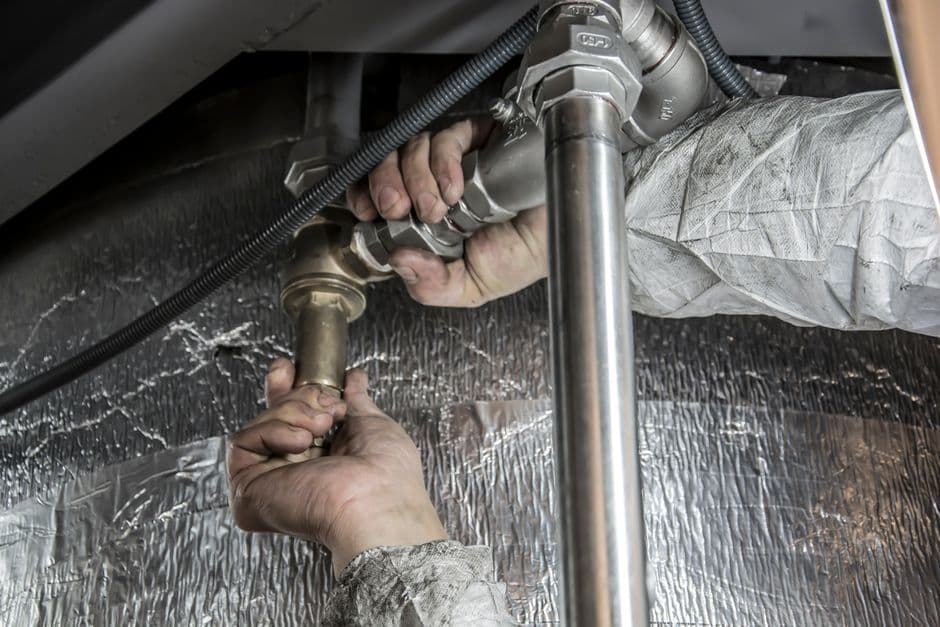
The device installs on your main water line, typically in the garage or utility closet where the city supply enters the home. Total on-site time: approximately 2 hours from arrival to completion, including installation, configuration, app setup, and a walkthrough of how the system works. Water is off for about 45 minutes during the plumbing work itself. No drywall cuts in the majority of installs, the main line entry point is accessible in most Houston homes without opening walls.
Plumbing work is performed through a Texas-licensed plumbing partner under Responsible Master Plumber M-43057. This is not a marketing detail, it is a requirement. Most carriers require documented professional installation under a licensed plumber to honor the insurance credit. The carrier needs to see that the device was installed by someone with the credentials and liability coverage to guarantee the work. A DIY install may void the device manufacturer's warranty and will not come with the carrier-recognized certificate that triggers the discount.
The certificate is the document that matters. It confirms the device model, serial number, installation date, installer license number, and the property address. HydroSense issues this certificate in both paper and digital form on the day of installation. You submit it to your carrier, and the credit applies to your next renewal. Without the certificate, the carrier has no basis to apply the discount regardless of whether a device is installed.
HydroSense serves the greater Houston metro including Sugar Land, Katy, The Woodlands, Pearland, and surrounding communities. Same licensing, same certificate, same carrier acceptance across the service area.
Cost and the Monitoring Subscription
Installation starts from $999 for a standard single-family home with an accessible main line. The price includes the device, all plumbing work, configuration, app setup, and the carrier-recognized insurance certificate. Homes with non-standard main line locations, multiple entry points, or accessibility challenges may require additional work that affects pricing, this is covered during the phone assessment before scheduling.
Monitoring subscriptions run from $9-$39/month depending on the level of service. Three tiers are available:
Basic, $9/mo or $99/yr
Installation, carrier-recognized certificate, email support. The certificate is issued at install and valid for one year. Renewal requires upgrading to Standard or scheduling a separate certificate renewal visit.
Standard, $19/mo or $199/yr
Annual certificate renewal included, 24/7 monitoring alerts with push notifications, priority scheduling for service calls. The annual certificate renewal is handled automatically, HydroSense reissues the certificate and sends it to you and your carrier before expiration.
Premier, $39/mo or $399/yr
Everything in Standard plus annual on-site inspection, insurance liaison service (HydroSense communicates directly with your carrier on your behalf), device warranty extension, and a dedicated account manager. Best suited for high-value homes or homeowners who want fully hands-off management of the device and the insurance credit.
Most homeowners choose Standard because the annual certificate renewal alone justifies the cost. Miss one renewal and the credit drops off your policy at the next renewal cycle. The carrier does not remind you. The credit simply disappears, and your premium increases by $300-$600 without explanation unless you check. The Standard plan eliminates that risk entirely.
The math on monitoring cost versus insurance credit is straightforward. Standard monitoring costs $199/year. The insurance credit returns $300-$600/year. The net cost of monitoring is effectively zero or negative, the credit exceeds the subscription cost in every scenario. You are being paid to have your home monitored. The device installation cost pays back within 18-24 months from the insurance credit alone, before accounting for the avoided loss exposure of a single unmitigated burst at $35,000.
Frequently asked questions
Can I use both a manual valve and a smart shutoff?
Yes. The smart shutoff installs on the main line and becomes your primary defense. The manual valve remains as a backup for maintenance situations where you want to shut off water manually, during a renovation, when replacing a fixture, or any scenario where you are intentionally working on the plumbing and want a physical valve you can close by hand. The two systems complement each other. The smart shutoff handles the emergencies. The manual valve handles the planned maintenance.
What if the smart shutoff triggers a false alarm?
Modern devices learn your usage patterns over a 3-7 day calibration period and have very low false-positive rates once calibrated. The device distinguishes normal domestic-water patterns, such as a shower or toilet refill, from a burst pipe. If a false closure does occur, you reopen the valve from the app in seconds, tap the notification, confirm reopening, and water resumes. A false closure wastes 30 seconds of your time. A missed burst costs $35,000. The asymmetry of those outcomes is why every device errs on the side of closing when uncertain.
Does the device restrict water pressure?
Negligible. Full-bore smart shutoff devices like Moen Flo and StreamLabs pass water through with minimal pressure loss, typically 1-3 PSI. For context, most Houston homes operate at 50-70 PSI from the city supply. A 1-3 PSI reduction is within the range of normal daily pressure fluctuation from the municipal system. You will not notice a difference in shower pressure or other domestic fixture performance.
How long do these devices last?
Manufacturer warranties range from 2 to 5 years depending on model. Designed service life is 10+ years for all three major devices. Ultrasonic models like StreamLabs have no internal moving parts exposed to water, which eliminates the primary wear mechanism that limits mechanical flow meters. If a device fails post-warranty, the replacement cost is lower than the initial install because the plumbing work (the cut-in, the fittings, the mounting) is already done. The replacement is a device swap, not a new installation.
Get ready before the freeze, not after the burst.
A smart water shutoff installed today protects an empty house at 3 a.m. in January. Waiting for the first hard-freeze warning means competing for the same install slots as everyone else who waited. Book a free assessment now and head into winter protected.
Get my free freeze-season assessmentRelated reading
Blog
The Texas freeze survival checklist
Complete 72-hour prep, during-freeze monitoring, and post-thaw inspection steps for Houston homeowners.
Blog
Frozen pipes while traveling
What to do when a freeze hits and you are not home to respond.
Devices
Smart water shutoff devices we install
Full comparison of Moen Flo, Phyn Plus, and StreamLabs Control with specifications and carrier acceptance.
Device
Flo by Moen
The most widely recognized smart shutoff with broadest carrier acceptance in Texas.
Service area
Sugar Land
Smart water shutoff installation and service in Sugar Land and Fort Bend County.